90 or 120 minutes · 3–5 players · System-neutral
The Festival of Silent Drums
The shared drums are silent. A council host, small performers and crowd stewards need an opening they can all accept.
A first look
Sticks bounce over the drums. Nothing answers. A child claps on the steps and every head turns toward that small, perfectly audible sound.
Inside your pack
- 5 authored places and 5 connections, with a separate GM decision map.
- 4 NPC cards with goals, offers and boundaries.
- 3 discovery cards with something players can compare, arrange or decide.
- 3 possible closures, including a partial result when the preferred plan fails.
- A one-page GM reference, complete GM book, public player book and state sheet.
- PDF, self-contained HTML and SVG files for offline use.
Two complete routes
90 minutes: Four turns, one opening
The cloth terms are public at the start. One counteroffer from each party is enough; moving the reprise is the only spare slot.
120 minutes: Hear the silence first
The cloth demonstration is earned in play. Leave the final slot unused on the clap route; the council’s welcome moves after the opening instead of being silently counted as consent.
Read the full GM book — contains spoilers
The Festival of Silent Drums
120-minute plan · 4 players · Bring people together The shared drums are silent. A council host, small performers and crowd stewards need an opening they can all accept. Content notice: Public performance pressure. Describe a beat instead of playing or singing it.
GM overview
Four opening slots are the actual negotiating resource. Toma begins by asking for two council slots but accepts one after a visible reply slot is reserved. Rue needs two protected invitations, for a quiet performer and a newcomer; the two may decline without cancelling the event. Esen needs one crowd reply plus a marked aisle. Allocate all four and take the extra action to mark the aisle before the drum opening. A handclap compact needs Rue and Esen but gives the council its welcome after the opening instead. A quiet procession remains possible with no agreement. Read the terms before asking for offers and record the specific concession each party makes.
What is really happening
Lio accepted a silence cloth to keep the council from drowning out small performers. Its four tabs lift only after freely accepted turns for a quiet performer, a newcomer, the ensemble and a reply. A clap opening works while the cloth remains.
Opening agreement and read-aloud
Agree on subjects to soften or skip. Each player names an ordinary skill and a reason to help. Evidence does not require a successful roll; uncertainty changes time, cost or obligations. Sticks bounce over the drums. Nothing answers. A child claps on the steps and every head turns toward that small, perfectly audible sound.
Time and preparation
120 minutes: Hear the silence first Opening agreement: 10 minutes Try the cloth and hear three requests: 30 minutes Compare drum and clap compacts: 40 minutes Stage the agreed opening: 30 minutes Closure and debrief: 10 minutes The cloth demonstration is earned in play. Leave the final slot unused on the clap route; the council’s welcome moves after the opening instead of being silently counted as consent. Starting information: Opening program Starting state: Opening slots = 4; Small performers accept = false; Stewards accept = false; Council accepts = false; Aisle marked = false; Cloth terms understood = false; Council rejects the opening offer = false With 4 players: share the roles of mapper, evidence keeper, speaker and timekeeper.
If the group gets stuck
A refused invitation can become a described rest. If a party rejects the whole compact, use the quiet procession. It opens the stalls but forfeits the performance; do not declare the cloth cured.
Festival square
Read aloud: Toma holds a card with two large empty boxes. GM: Toma asks for a formal welcome and reprise. He can surrender the reprise if the public gets its own reply. The council must be heard later if it loses both opening turns.
Choice: Offer one welcome and a later reprise
Ask: Give the last opening slot to the council and move the reprise? Requires: Stewards accept is true and Council rejects the opening offer is false. Spend 1 Opening slots. Council accepts: true Result: Toma crosses out the opening reprise and accepts one welcome.
Choice: Record the council’s refusal of a single opening slot
Ask: Accept the refusal and offer a later welcome after a clap opening? Requires: Available. Council rejects the opening offer: true; Council accepts: false Result: Toma declines the one-slot opening. A later welcome can accompany the clap compact; the shared-drum compact is unavailable.
Costume tent
Read aloud: Rue touches a tab; the room seems to hold its breath. GM: Rue explains the invitation sequence, never demands a player perform. Protect two small voices with two slots.
Choice: Ask Rue to demonstrate the tabs
Ask: What makes an invitation different from a command? Requires: Available. Cloth terms understood: true. Reveal Four cloth tabs, Opening program Result: The quiet tab lifts for a willing whisper and falls back when the demonstration ends.
Choice: Protect the two small invitations
Ask: Reserve two of four slots, with the right to decline? Requires: Available. Spend 2 Opening slots. Small performers accept: true Result: Rue accepts the written invitation terms.
Rehearsal steps
Read aloud: Esen taps an aisle on the paving with a broom. GM: The clap route needs no drum repair. Esen accepts one reply slot, but still insists the aisle be physically marked.
Choice: Reserve the crowd’s reply
Ask: Use one opening slot for an audience response? Requires: Available. Spend 1 Opening slots. Stewards accept: true. Reveal Steward’s chalk plan Result: Esen recruits clap leaders and asks you to mark the lane.
Choice: Mark and staff the aisle
Ask: Who stands at the two ends while the opening proceeds? Requires: Available. Aisle marked: true Result: The crowd shifts back, leaving a continuous lane.
Choice: Open with handclaps
Ask: Keep the drums silent and give the council its welcome afterward? Requires: Small performers accept is true and Stewards accept is true and Aisle marked is true. Result: The leaders start a small clap that travels around the square. Closure: Hands carry the festival
Silent stage
Read aloud: Lio offers the sticks handle-first and waits. GM: Lio will lift tabs only after invitations are accepted. Check the three stances and aisle, then resolve the opening in the order printed on the invitation card.
Choice: Offer the four opening turns
Ask: Invite quiet, newcomer, ensemble and reply in order? Requires: Cloth terms understood is true and Small performers accept is true and Stewards accept is true and Council accepts is true and Aisle marked is true. Result: Lio lifts each tab as its invitation is answered. Closure: An opening with room to answer
Bell balcony
Read aloud: The bell rope reaches down toward an empty audience lane. GM: The full opening can be called here. A late council welcome is visible to everyone from this balcony.
Connections and changing routes
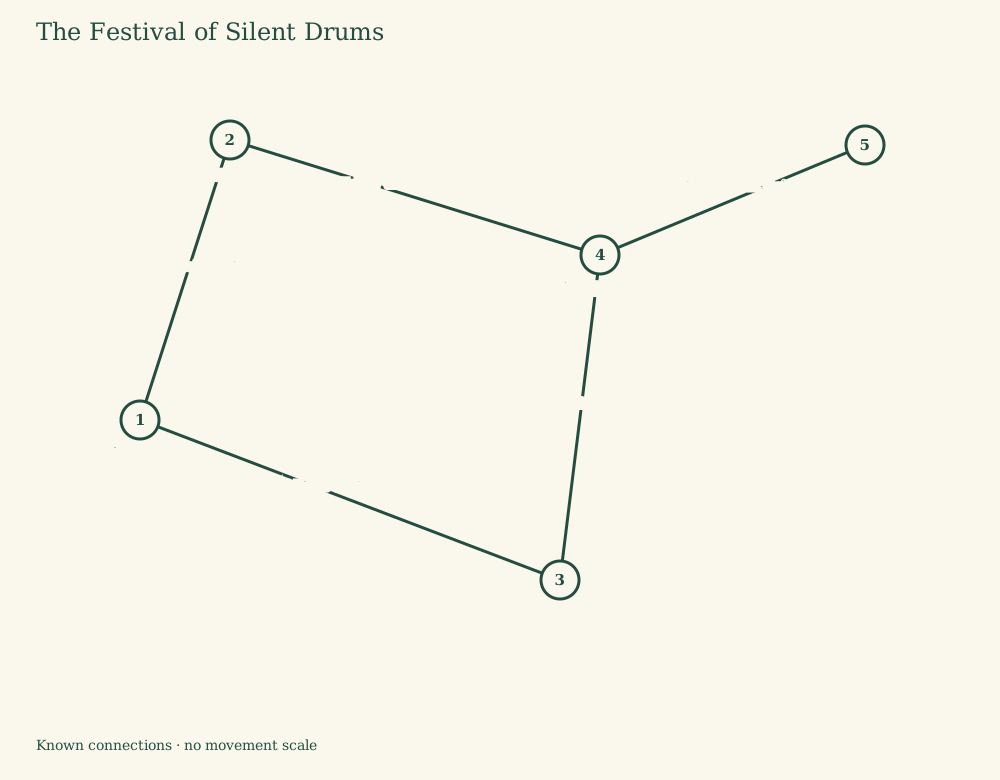
Festival square ↔ Costume tent: Pass the costume line. Available. Festival square ↔ Rehearsal steps: Walk the audience edge. Available. Costume tent ↔ Silent stage: Follow the colored cloth. Available. Rehearsal steps ↔ Silent stage: Use the performer ramp. Available. Silent stage ↔ Bell balcony: Climb the bell stair. Available.
Toma — Council host
Goal: Give the festival an audible welcome Offers: Surrender a reprise if the crowd gets a reply. Will not accept: The council cannot simply be erased from the program. Voice: “One welcome, then I can listen.” Track: Council accepts
Rue — Small performers’ representative
Goal: Protect quiet and newcomer invitations Offers: Two willing performers and a cloth demonstration. Will not accept: An invitation must allow refusal. Voice: “A space on paper is not yet a turn.” Track: Small performers accept
Esen — Crowd steward
Goal: Make the reply accessible and the aisle clear Offers: Handclap leaders and aisle markers. Will not accept: No crowded opening without an exit lane. Voice: “Leave room to answer and room to leave.” Track: Stewards accept
Lio — Keeper of the silent drums
Goal: Make room for freely accepted small voices Offers: The cloth and a tab-by-tab opening demonstration. Will not accept: No tab is lifted by commanding a performer to accept. Voice: “Ask once, then leave room for the answer.”
Discovery card: Four cloth tabs
Give only when revealed in play. Blue: a quiet invitation. Green: a newcomer invitation. Gold: an ensemble turn. White: an audience reply. An invitation may be declined. Write who offers each turn and what a refusal changes. Player task: Arrange an opening and leave space for a substitute sound. GM answer: Protected invitations, ensemble welcome and audience reply meet the four terms without compelling performance.
Discovery card: Opening program
Give only when revealed in play. Four slots total. Small performers request two. Stewards request one reply. Council requests a welcome and reprise. Cross out or move one request before assigning the four slots. Player task: Make a visible counteroffer instead of promising five turns. GM answer: Move the council reprise later; or use claps and move the entire council welcome later.
Discovery card: Steward’s chalk plan
Give only when revealed in play. Audience benches surround the stage. A straight lane from the steps to the square remains empty. Mark who will hold each end of it. Claps and voices remain audible without drums. Player task: Assign aisle stewards and compare the clap opening. GM answer: Marking the aisle is its own required action; accepting a reply slot alone does not do it.
State sheet
Opening slots: 4 (resource, minimum 0, maximum 4) Small performers accept: false (stance) Stewards accept: false (stance) Council accepts: false (stance) Aisle marked: false (flag) Cloth terms understood: false (knowledge) Council rejects the opening offer: false (stance)
At any place: Lead a quiet procession
Open the fair by walking the stalls and postpone the disputed program? Requires: Available. The banner moves slowly between stalls; the drums remain covered.
Ending: An opening with room to answer
Requires: Council accepts is true and Small performers accept is true and Stewards accept is true and Aisle marked is true The cloth becomes four ordinary scarves. The quietest beat opens a sequence everyone helped shape. Next: Who keeps the accepted program for next year?
Ending: Hands carry the festival
Requires: Small performers accept is true and Stewards accept is true and Aisle marked is true The fair opens to claps. The council welcomes visitors later; shared drum rights remain to be negotiated. Next: When will Lio and the council revisit the instrument agreement?
Ending: A festival on foot
Requires: Available The stalls open during a quiet procession. The opening performance is cancelled, but nobody is pressured into giving up a voice. Next: Whose invitation should begin the next meeting?